
7 min read
If you went vitamin shopping in the 1990s, you probably remember the bottle: amber gelatin capsules of vitamin E, 400 IU each, sold as everyday protection for your heart. Plenty of people took one with breakfast for years. Then, fairly quietly, the bottles disappeared from a lot of kitchen counters. So what happened, and how much vitamin E per day do you actually need?
Quick answer: adults need 15 mg of vitamin E per day, which is about 22 IU of the natural form. The upper limit is 1,000 mg a day, but large trials of 400 IU doses found no protection against heart disease or cancer, and some found harm, including a higher risk of prostate cancer. For most people, food and a basic multivitamin cover what they need.
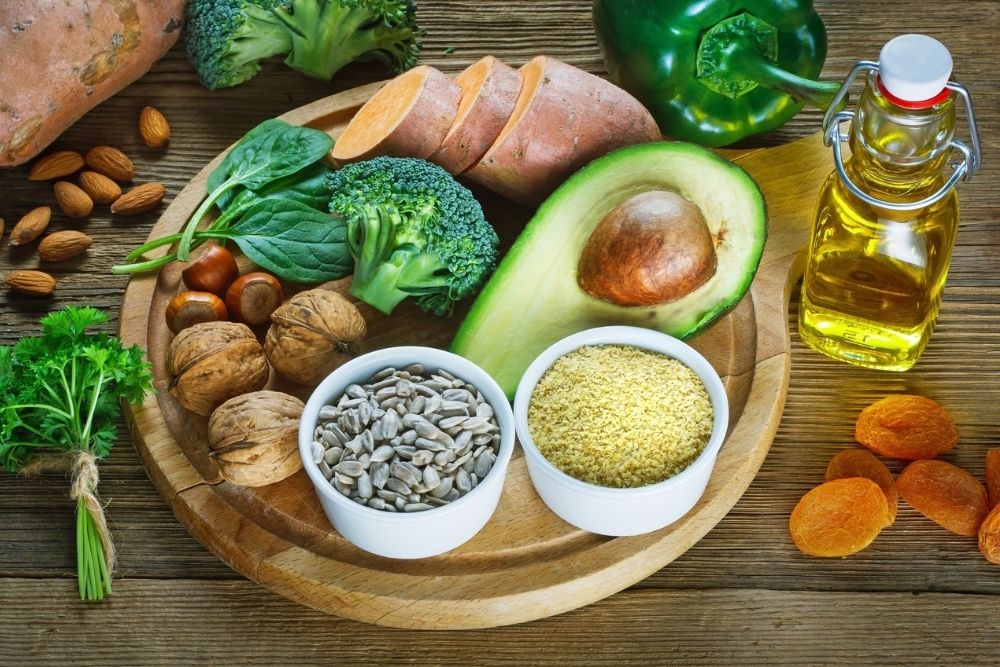
[IMAGE: small bowls of almonds, sunflower seeds, and hazelnuts next to a bottle of sunflower oil | alt: food sources showing how much vitamin E per day you can get from nuts and seeds]
How Much Vitamin E Per Day Do You Need?
According to the NIH Office of Dietary Supplements, the Recommended Dietary Allowance for vitamin E is 15 mg a day for everyone 14 and older. The Harvard T.H. Chan School of Public Health notes that needs rise slightly, to 19 mg, while breastfeeding.
The Tolerable Upper Intake Level for adults is 1,000 mg a day from supplements. That sounds like a huge gap between need and limit, and it is. But as you will see, “below the upper limit” turned out not to mean “helpful” or even “harmless” for vitamin E.
Why the IU Numbers Are Confusing
Many labels still list vitamin E in international units, and the conversion depends on the form. The NIH gives 1.49 IU per mg for natural vitamin E and 2.22 IU per mg for synthetic. So a 400 IU capsule of the natural form contains 268 mg, while 400 IU of the synthetic form contains 180 mg. Either way, that is 12 to 18 times the daily requirement.
The Rise of the Megadose
The enthusiasm had real roots. Vitamin E is a fat-soluble antioxidant, and the theory was that it could protect cells from the kind of oxidative damage linked to heart disease and cancer.
Early observational research seemed to back that up. The NIH describes one study of about 90,000 nurses in which heart disease was 30% to 40% lower among those with the highest vitamin E intakes, mainly from supplements. National survey data found that 11.3% of adults took vitamin E supplements containing at least 400 IU.
The catch with observational studies is that people who take supplements tend to differ from those who do not. They often exercise more, smoke less, and see doctors more regularly. Only randomized trials can separate the pill from the person taking it, and those trials told a different story.
What the Big Trials Found
Several large, long-running trials put high-dose vitamin E to the test. Here is what the NIH fact sheet reports:
- HOPE-TOO: Participants who took 400 IU a day of natural vitamin E (268 mg) were 13% more likely to develop heart failure and 21% more likely to be hospitalized for it.
- Physicians’ Health Study II: 400 IU of synthetic vitamin E (180 mg) every other day had no effect on major cardiovascular events, heart attack, stroke, or cancer over about 8 years, and was linked to an increased risk of hemorrhagic stroke.
- Women’s Health Study: 600 IU of natural vitamin E (402 mg) on alternate days made no significant difference in overall cardiovascular events or cancer. There was a 24% reduction in cardiovascular deaths, an intriguing result, but not enough to outweigh the lack of benefit on overall events.
The NIH also notes that meta-analyses have linked vitamin E doses of 400 IU a day or more with a small but statistically significant increase in death from any cause. Small is the key word, but when a supplement shows no clear benefit, even a small risk tips the scale.
The SELECT Trial and Prostate Cancer
The finding that really closed the book came from the Selenium and Vitamin E Cancer Prevention Trial, known as SELECT. Researchers enrolled 35,533 healthy men age 50 and older, hoping vitamin E and selenium would lower prostate cancer risk.
Instead, the 2011 follow-up published in JAMA found that men taking 400 IU a day of synthetic vitamin E alone had a 17% higher risk of prostate cancer than those on placebo. In absolute terms, that was 1.6 extra cases per 1,000 person-years. The authors concluded that vitamin E supplementation significantly increased prostate cancer risk among healthy men.
Where Experts Landed
In 2022, the US Preventive Services Task Force gave vitamin E a grade D for preventing heart disease and cancer, which means it recommends against it. The Task Force found no benefit on death from any cause or on cardiovascular events, and concluded there is no net benefit. Beta-carotene is the only other supplement in that recommendation to receive the same grade.
Harvard’s summary is similar: most randomized trials found no heart benefit, whether in healthy people or those who already had heart disease. The one area with a supporting role is eye health, where vitamin E combined with other antioxidants offered some protection against advanced age-related macular degeneration. On its own, vitamin E does not seem to offer much benefit.
If this pattern sounds familiar, it is. Fish oil followed a similar arc of promising observational data followed by sobering trials, which we covered in is fish oil worth taking.
Bleeding Risk and Medications
At high doses, vitamin E can raise the risk of bleeding. The NIH warns that doses above roughly 400 IU a day, combined with anticoagulants like warfarin, may increase the risk of bleeding. Harvard points to bleeding risk particularly at doses above 1,000 mg a day, the same level as the upper limit (about 1,465 IU).
If you take a blood thinner or have surgery coming up, tell your clinician about any vitamin E you take, including in combination products. Our post on medications and vitamin levels has more on how drugs and supplements interact.
Getting Vitamin E From Food
True vitamin E deficiency is rare in healthy people. It mainly affects people with conditions that interfere with fat absorption, since vitamin E needs dietary fat to be absorbed. The NIH also notes that most Americans’ diets fall short of the RDA, which is a good reason to lean on these foods:
- Wheat germ oil, 1 tablespoon: 20.3 mg
- Sunflower seeds, dry roasted, 1 ounce: 7.4 mg
- Almonds, dry roasted, 1 ounce: 6.8 mg
- Sunflower oil, 1 tablespoon: 5.6 mg
- Hazelnuts, 1 ounce: 4.3 mg
- Peanut butter, 2 tablespoons: 2.9 mg
- Spinach, boiled, half cup: 1.9 mg
An ounce each of sunflower seeds and almonds gets you close to the full 15 mg. If you want a simple backstop, our Vitamin100 Multivitamin includes 15 mg of vitamin E, exactly 100% of the Daily Value, in line with our view on why most multivitamins have too much.
Frequently Asked Questions
Is 400 IU of vitamin E too much?
400 IU is below the 1,000 mg upper limit, but it is still 12 to 18 times the daily requirement. Large trials at that dose found no protection against heart disease or cancer, and SELECT found a higher prostate cancer risk. Unless your clinician has a specific reason, there is little case for taking that much.
Is natural vitamin E better than synthetic?
The two forms convert differently, so the same IU number means different amounts: 400 IU is 268 mg of natural vitamin E but 180 mg of synthetic. Both forms were tested in trials that showed no clear benefit at high doses. The form matters less than simply not megadosing.
Should I take vitamin E for my eyes?
Vitamin E combined with other antioxidants offered some protection against advanced macular degeneration in research, but vitamin E alone does not seem to help much. If you have been diagnosed with macular degeneration, ask your eye doctor about a specific formula rather than adding vitamin E on its own.
Can I get enough vitamin E from food?
Yes. A small handful of almonds or sunflower seeds, a drizzle of sunflower oil, and some leafy greens can cover most of the 15 mg you need. Deficiency is rare unless you have trouble absorbing fat.
The Bottom Line
Vitamin E is essential, but the megadose era ended for good reasons. Trials found that 400 IU a day did not prevent heart disease or cancer and brought some real risks. Aim for 15 mg a day from nuts, seeds, oils, and greens, with a modest multivitamin as backup if you like, and leave the high-dose capsules on the shelf.
Sources
- Vitamin E: Fact Sheet for Health Professionals, NIH Office of Dietary Supplements, accessed 2026
- Vitamin E and the Risk of Prostate Cancer: The Selenium and Vitamin E Cancer Prevention Trial (SELECT), JAMA, 2011
- Vitamin, Mineral, and Multivitamin Supplementation to Prevent Cardiovascular Disease and Cancer, US Preventive Services Task Force, 2022
- Vitamin E, Harvard T.H. Chan School of Public Health, The Nutrition Source, accessed 2026
These statements have not been evaluated by the Food and Drug Administration. This product is not intended to diagnose, treat, cure, or prevent any disease. This article is for general education and is not a substitute for advice from your healthcare provider.