
6 min read
If you eat plant-based, you have heard it at every family dinner: “But where do you get your protein?” It is the wrong question. Most people eating a varied plant-based diet get enough protein without much effort. The better question, the one people ask on nutrition-tracking forums late at night, is “How do I actually hit 100% of my targets on a vegan diet?”
Quick answer: the most common vegan nutrient deficiencies involve vitamin B12, iodine, vitamin D, calcium, iron, zinc, and long-chain omega-3s. B12 is the one that is truly non-negotiable, because natural sources are limited to animal foods, so vegans need fortified foods or a supplement. The rest can often be covered with smart food choices plus a few targeted supplements.
This is not an argument against eating plants. It is a checklist so your diet works as well as your reasons for choosing it.
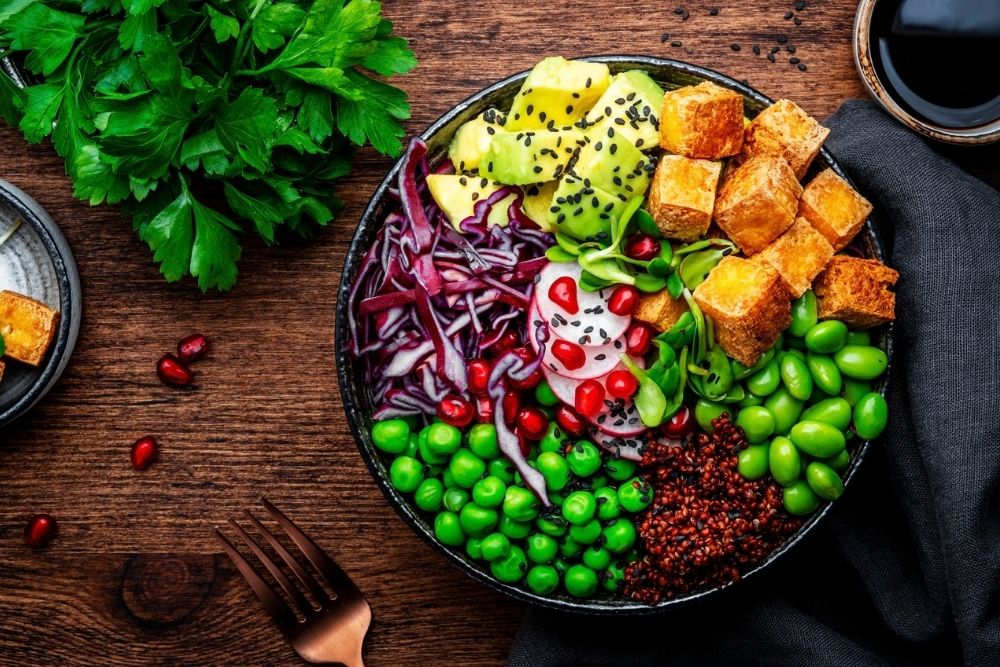
[IMAGE: Colorful grain bowl with tofu, chickpeas, greens, and seeds on a wooden table | alt: plant-based meal bowl, avoiding vegan nutrient deficiencies]
Vegan Nutrient Deficiencies: What the Research Shows
The best overview comes from a 2022 systematic review in Nutrients by Neufingerl and Eilander that pulled together 141 studies. Compared with vegetarians and meat eaters, vegans had the lowest intakes of B12, calcium, and iodine. They also had lower iodine status and lower bone mineral density.
Vitamin D intake stood out too: vegans averaged 1.52 mcg a day compared with 4.17 mcg in meat eaters, and average intake fell below the estimated requirement in every diet group. The good news from the same review is that vegans ate more fiber, folate, and vitamin C than meat eaters. The goal is to keep those advantages and patch the gaps.
Vitamin B12: The Non-Negotiable
B12 keeps your nerves and red blood cells healthy, and a shortfall can take years to show up because the body stores it. According to the NIH Office of Dietary Supplements, vegans have a higher risk of deficiency because natural food sources of B12 are limited to animal foods. Fortified foods and supplements substantially reduce that risk.
Practical options include fortified breakfast cereals, fortified nutritional yeast, and fortified plant milks, along with a B12 supplement. Read labels, because not every brand of nutritional yeast or plant milk is fortified. If you are pregnant or breastfeeding on a vegan diet, B12 matters even more, since babies of vegan mothers can develop deficiency early. Our post on postpartum nutrition while breastfeeding covers that in more detail.
Iodine: The Sneaky One
Iodine is essential for thyroid hormones, and most omnivores get much of theirs from dairy, seafood, eggs, and iodized salt. Take those away and the gap can open quickly. NIH notes that vegans who skip dairy, seafood, and eggs are at risk of low intake.
There is a twist that catches health-conscious eaters. Sea salt, kosher salt, and Himalayan salt are typically not iodized, and neither is most salt in packaged foods. If the shaker in your kitchen is pink or flaky, check your iodine another way: use iodized salt in home cooking, or look for iodine in your multivitamin. Seaweed contains iodine too, but amounts vary widely.
Vitamin D (and the Vegan D3 Question)
Vitamin D is hard for anyone to get from food, and vegans have even fewer options since fatty fish and egg yolks are off the table. Fortified plant milks and UV-exposed mushrooms help, and sensible sun exposure contributes for part of the year in many places.
If you supplement, here is a detail that surprises people. According to NIH, vitamin D3 is typically made from lanolin, which comes from sheep’s wool. That makes it vegetarian but not vegan. Lichen-based vegan D3 does exist, and vitamin D2 is typically vegan as well. For how the two forms compare, see our explainer on vitamin D3 vs D2. A blood test is the best way to find out if you actually need to supplement and how much.
Iron and Zinc: Present, but Harder to Absorb
Plant foods like lentils, beans, tofu, and fortified cereals contain plenty of iron. The catch is that plant (non-heme) iron is absorbed less efficiently than iron from meat. That is why the NIH says vegetarians need 1.8 times the usual recommended iron intake.
Two easy tricks help. Pair iron-rich foods with vitamin C (beans with salsa, lentil soup with tomatoes, oatmeal with strawberries), and keep coffee and tea away from your iron-heavy meals. Tea in particular can sharply cut non-heme iron absorption, as we explain in coffee, tea, and your vitamins. Before taking an iron supplement, get your ferritin checked, since too much iron is harmful.
Zinc works in a similar way. NIH notes that legumes and whole grains contain phytates, which bind zinc and reduce absorption, and that people eating vegetarian or vegan diets usually have lower zinc intakes and blood levels. Soaking and fermenting (think sourdough and tempeh) can improve absorption.
Calcium and Omega-3s
Calcium shows up on the low-intake list for vegans, and the lower bone mineral density seen in the Neufingerl review suggests it matters. Calcium-set tofu, fortified plant milks and yogurts, and low-oxalate greens like kale and bok choy are your best bets. Shake fortified plant milk before pouring, because the added calcium can settle at the bottom.
For omega-3s, plant foods provide ALA from flaxseed, chia, hemp seeds, and walnuts. The longer-chain EPA and DHA are mostly found in seafood, but fish get them from algae in the first place. NIH notes that algal oil supplements usually provide around 100 to 300 mg of DHA. Whether you need one is less clear, which we discuss in our look at whether fish oil is worth taking.
What a Nutrient-Smart Vegan Day Can Look Like
Checklists are easier to follow when you can picture them on a plate. Here is one example day, not a prescription:
- Breakfast: fortified cereal or oatmeal with fortified soy milk, ground flaxseed, and strawberries (B12, calcium, ALA, and vitamin C to help iron absorption).
- Lunch: lentil and tomato soup with a slice of sourdough, plus a handful of walnuts.
- Snack: hummus with bell pepper strips.
- Dinner: stir-fried calcium-set tofu with bok choy and brown rice, seasoned with iodized salt and a sprinkle of fortified nutritional yeast.
Save the coffee or tea for between meals, and you have quietly covered a lot of the list.
Where a Multivitamin Fits for Vegans
A well-planned plant-based diet can do most of the heavy lifting, and a multivitamin can cover several gaps at once. If you go that route, check that it is actually vegan (look at the capsule material and the source of vitamin D) and that it includes B12 and iodine.
For transparency, our Vitamin100 multivitamin is vegan, with a vegetable cellulose capsule, and provides B12, iodine, and zinc at 100% of the Daily Value. It contains no iron, vitamin D, or calcium, so it does not replace those. Our separate D3 is lanolin-derived, which makes it vegetarian but not vegan. If you need vitamin D and are strictly vegan, look for a lichen-based D3 instead.
Frequently Asked Questions
Should vegans take supplements?
At minimum, vegans need a reliable source of B12, either fortified foods or a supplement. Many also benefit from support with iodine and vitamin D. Iron, zinc, and calcium can often come from food with good planning, but testing helps confirm that.
What is the most common vegan nutrient deficiency?
Vitamin B12 is the best-known risk because plant foods do not naturally contain it. Research also shows vegans tend to have low intakes of calcium, iodine, and vitamin D.
Is vitamin D3 vegan?
Usually not. Most D3 comes from lanolin in sheep’s wool, which is vegetarian. Vegan D3 made from lichen is available, and vitamin D2 is typically vegan too.
How do I get enough iodine on a vegan diet?
Use iodized salt when you cook at home, since sea salt and Himalayan salt are typically not iodized. A multivitamin that contains iodine is another reliable option. Seaweed is inconsistent, so do not rely on it alone.
The Bottom Line
Eating plant-based can be a very healthy way to live, and it works best with a plan. Lock in B12, pay attention to iodine and vitamin D, pair iron-rich foods with vitamin C, and choose fortified staples. Then enjoy your lentil soup in peace, even when someone asks about protein.
Sources
- Nutrient Intake and Status in Adults Consuming Plant-Based Diets Compared to Meat-Eaters: A Systematic Review, Neufingerl and Eilander, Nutrients, 2022
- Vitamin B12: Fact Sheet for Health Professionals, NIH Office of Dietary Supplements, 2025
- Iodine: Fact Sheet for Health Professionals, NIH Office of Dietary Supplements, 2024
- Vitamin D: Fact Sheet for Health Professionals, NIH Office of Dietary Supplements, n.d.
- Iron: Fact Sheet for Health Professionals, NIH Office of Dietary Supplements, 2025
- Zinc: Fact Sheet for Health Professionals, NIH Office of Dietary Supplements, 2026
- Omega-3 Fatty Acids: Fact Sheet for Health Professionals, NIH Office of Dietary Supplements, n.d.
These statements have not been evaluated by the Food and Drug Administration. This product is not intended to diagnose, treat, cure, or prevent any disease. This article is for general education and is not a substitute for advice from your healthcare provider.