
6 min read
Flip over almost any multivitamin and you will see vitamin A listed as retinyl acetate, retinyl palmitate, beta-carotene, or some mix of the three. They all count toward the same line on the label, but they do not behave the same way once they are inside your body. One form your body can store until it becomes a problem. The other it converts only as needed. Knowing the difference is the easiest way to get enough vitamin A without drifting into too much.
Quick answer: adult men need 900 mcg RAE of vitamin A a day and adult women need 700 mcg RAE. Preformed vitamin A (retinol and retinyl esters from animal foods and most supplements) has an upper limit of 3,000 mcg a day, because your body stores it and excess can build up. Beta-carotene from fruits and vegetables has no upper limit, but high-dose beta-carotene supplements raised lung cancer risk in smokers and are best avoided if you smoke or used to.
Two Kinds of Vitamin A
Vitamin A is not one compound. It is a family, and it comes from two very different places.
- Preformed vitamin A (retinol and retinyl esters). This is the ready-to-use form found in liver, fish, eggs, and dairy. Most supplements use it as retinyl acetate or retinyl palmitate. Your body absorbs it well and stores the extra in your liver.
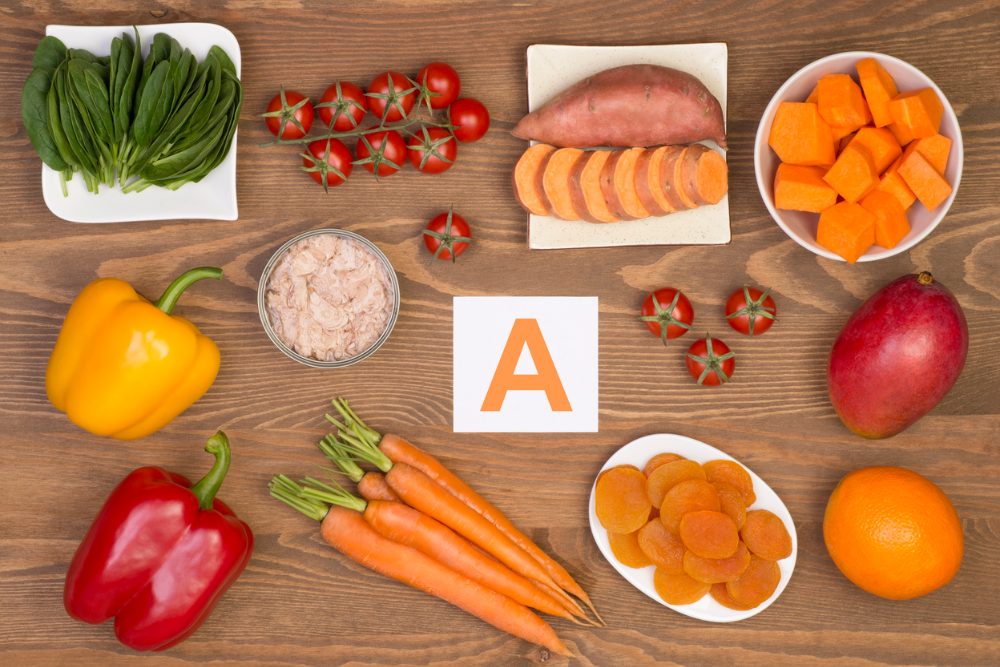
- Provitamin A carotenoids, mainly beta-carotene. These are the orange and yellow pigments in sweet potatoes, carrots, pumpkin, and dark leafy greens. Your body converts them into vitamin A, but only as much as it needs.
That last point is the whole story in a sentence. Retinol arrives finished, so there is no brake on how much you absorb. Beta-carotene has to be converted, and that conversion slows down when your stores are full.
How Much Vitamin A Do You Need?
According to the NIH Office of Dietary Supplements, the Recommended Dietary Allowances for adults are:
- Men 19 and older: 900 mcg RAE
- Women 19 and older: 700 mcg RAE
- Pregnancy: 770 mcg RAE
- Breastfeeding: 1,300 mcg RAE
RAE stands for retinol activity equivalents. It exists because the forms are not equally potent. One mcg of retinol equals 1 mcg RAE, but it takes about 2 mcg of supplemental beta-carotene, or 12 mcg of beta-carotene from food, to make the same 1 mcg RAE. Supplement labels use a Daily Value of 900 mcg RAE.
Older labels and some imported products still list vitamin A in IU. As a rough guide, 1 IU of retinol equals 0.3 mcg RAE, so 3,000 IU of retinol is about 900 mcg RAE. If you want a refresher on decoding these numbers, our guide to reading a supplement label walks through it.
How Much Vitamin A Is Too Much?
The Tolerable Upper Intake Level for adults is 3,000 mcg of preformed vitamin A a day, including during pregnancy and breastfeeding. The limit applies only to retinol and retinyl esters. Beta-carotene does not count toward it.
Because preformed vitamin A is stored rather than flushed out, the risk comes from steady intake above the limit over months or years. The NIH lists chronic symptoms such as dry skin, joint and muscle pain, fatigue, depression, and abnormal liver tests. Very large single doses can cause severe headache, blurred vision, nausea, and dizziness.
A few situations deserve extra attention:
- Bone health. In the Nurses’ Health Study, which followed more than 72,000 postmenopausal women for 18 years, those getting at least 2,000 mcg of retinol a day had a hip fracture risk about 1.9 times higher than women getting less than 500 mcg. Beta-carotene was not linked to fractures.
- Pregnancy. Preformed vitamin A above the upper limit can cause birth defects. The NIH advises pregnant and breastfeeding women to avoid supplement doses above 3,000 mcg RAE (10,000 IU) a day. Beta-carotene is not known to cause birth defects.
- Liver as a regular food. Three ounces of pan-fried beef liver contains about 6,582 mcg RAE, more than twice the daily upper limit in a single serving. An occasional serving is fine. Eating it several times a week while also taking a vitamin A supplement adds up fast.
We covered why piling extra nutrients into one pill rarely helps in why most multivitamins have too much of what you do not need, and vitamin A is a textbook example.
The Beta-Carotene Warning for Smokers
Beta-carotene from food is safe. The worst it usually does at very high intakes is tint your skin slightly orange, a harmless condition that fades when you cut back. High-dose beta-carotene supplements are a different matter.
Two large trials changed how experts think about them. In the ATBC study, 29,133 male smokers took 20 mg of beta-carotene a day, and their lung cancer risk rose 18%. The CARET trial, which combined 30 mg of beta-carotene with retinyl palmitate, was stopped early after lung cancer risk rose 28% and lung cancer deaths rose 46%.
The same pattern showed up again in the eye study known as AREDS2. Participants assigned beta-carotene had nearly double the odds of lung cancer over 10 years, mostly among former smokers. That is why the current AREDS2 eye vitamin formula uses lutein and zeaxanthin instead of beta-carotene. If you smoke or used to, skip high-dose beta-carotene supplements and get your carotenoids from food.
Vitamin A in Skincare Is a Different Story
Retinol creams and prescription retinoids like tretinoin act on the skin and are not the same as swallowing extra vitamin A. Taking oral vitamin A supplements will not give you the results of a topical retinoid, and high doses can cause the problems described above.
If you take an oral retinoid medication such as isotretinoin or acitretin, talk with your prescriber before using any supplement that contains vitamin A, because the combination can raise the risk of vitamin A toxicity.
The Best Food Sources of Vitamin A
Most people in the U.S. get enough vitamin A from a normal diet, and true deficiency here is rare. These foods from the NIH list make it easy:
- Sweet potato, baked, 1 whole: 1,403 mcg RAE
- Spinach, frozen, boiled, half cup: 573 mcg RAE
- Pumpkin pie, 1 piece: 488 mcg RAE
- Carrots, raw, half cup: 459 mcg RAE
- Beef liver, pan-fried, 3 ounces: 6,582 mcg RAE
Pair colorful vegetables with a little fat, like olive oil or the eggs at breakfast, since carotenoids are fat-soluble and absorb better with a meal.
Where a Daily Multivitamin Fits
For most adults, the goal is simply to meet the RDA, not to exceed it. Our Vitamin100 Multivitamin provides 900 mcg of vitamin A as vitamin A acetate, which is 100% of the Daily Value and well under the 3,000 mcg upper limit. That leaves plenty of room for the vitamin A in your food.
If you also take a separate eye, skin, or immune formula, add up the preformed vitamin A across all of them. And if you are pregnant or planning to be, review your total with your healthcare provider. For a broader look at how the fat-soluble vitamins work together, see our posts on vitamin E and vitamin K2 with D3.
Frequently Asked Questions
Is 10,000 IU of vitamin A too much?
If it is preformed vitamin A (retinol or retinyl esters), 10,000 IU equals 3,000 mcg RAE, which is right at the adult upper limit. Taking that every day on top of food leaves no margin. If the 10,000 IU comes from beta-carotene, it does not count toward the upper limit, though smokers should still avoid high-dose beta-carotene supplements.
Can you get too much vitamin A from carrots?
Not in the toxic sense. Your body converts beta-carotene to vitamin A only as needed. Eating a lot of carrots can turn your skin a little orange, which is harmless and goes away when you eat fewer.
Does vitamin A improve eyesight?
Vitamin A is essential for normal vision, and deficiency causes night blindness. If you already get enough, extra vitamin A will not sharpen your eyesight. For age-related macular degeneration, the studied formula (AREDS2) uses lutein and zeaxanthin rather than beta-carotene.
Should I take a vitamin A supplement for acne?
Oral vitamin A supplements are not a substitute for prescription acne treatment, and high doses carry real risks. Topical and prescription retinoids are the evidence-based options, and they should be used under a dermatologist’s guidance.
The Bottom Line
Vitamin A is essential, but the form matters. Beta-carotene from colorful plants is self-limiting and safe. Preformed vitamin A from supplements and liver is efficient but stored, so the 3,000 mcg upper limit is worth respecting, especially for bone health and pregnancy. Aim for the RDA, eat your sweet potatoes and greens, and let a 100% Daily Value multivitamin cover the rest.
Sources
- Vitamin A and Carotenoids: Fact Sheet for Health Professionals, NIH Office of Dietary Supplements, updated 2025
- Vitamin A intake and hip fractures among postmenopausal women, Feskanich et al., JAMA, 2002
- Long-term Outcomes of Adding Lutein/Zeaxanthin and Omega-3 Fatty Acids to the AREDS Supplements, Chew et al., JAMA Ophthalmology, 2022
These statements have not been evaluated by the Food and Drug Administration. This product is not intended to diagnose, treat, cure, or prevent any disease. This article is for general education and is not a substitute for advice from your healthcare provider.